Mickie Krause – Ich Bin Solo
Chapter 2:
First Contact
An apartment in the center of Dortmund with its own small courtyard. I decided to clean up downstairs. There was dirt there dating back to World War II. A neighbor came out to see me. He was a sly, red-haired native German—very charming, though. He asked why I was cleaning, who I was in general, and where I came from. In my terrible German, I explained everything and said that later on I wanted to grill there. He said, “I’m with you.” We became friends and remain so to this day.
Klaus Hoffmann. *Lives completely alone, no children, loves beer and football. In the basement there are always at least five crates of beer and one more in the fridge. Beer must be cold. Bier muss kalt sein, Frau muss heiß sein. The refrigerator is stuffed to the brim with ready-made food. He has a girlfriend who lives alone in a neighboring town.
I was surprised. If you don’t stop reading my work, very soon—after just a few dozen pages—we will return to them and understand why they live alone. In this part or the next, we will examine this couple in detail and find out how they came to this and where it led. Klaus did a great deal for me. With his help, I integrated into German society very quickly. I wasn’t friends with him for the sake of integration—I was simply curious how Germans, having lost the last two world wars, managed to build such a beautiful and wealthy country. The answer to this question is very simple: talk less and show off less. You have to do the hardest thing—just work.
The German nation is very hardworking and disciplined,
but at the same time they have problems with making breakfast. The morning lines at bakeries always surprised me. If the bakery is closed for some reason, everyone stays hungry. In general, Germans don’t cook. They eat mostly convenience food or ready-made meals delivered to their homes. Usually it’s pizza or something similar. There’s no time to cook. They come home from work, sleep, and go back to work.

Germans work a lot and take responsibility seriously. At work they are extremely focused. You can’t really talk to a German during working hours. He will politely move the conversation to after work, or better yet, to the weekend. This doesn’t apply to everyone, but to most. In European capitalism, without education you remain a slave for life. With education too—just in a better car.
So, we have been in Germany for quite a while now.
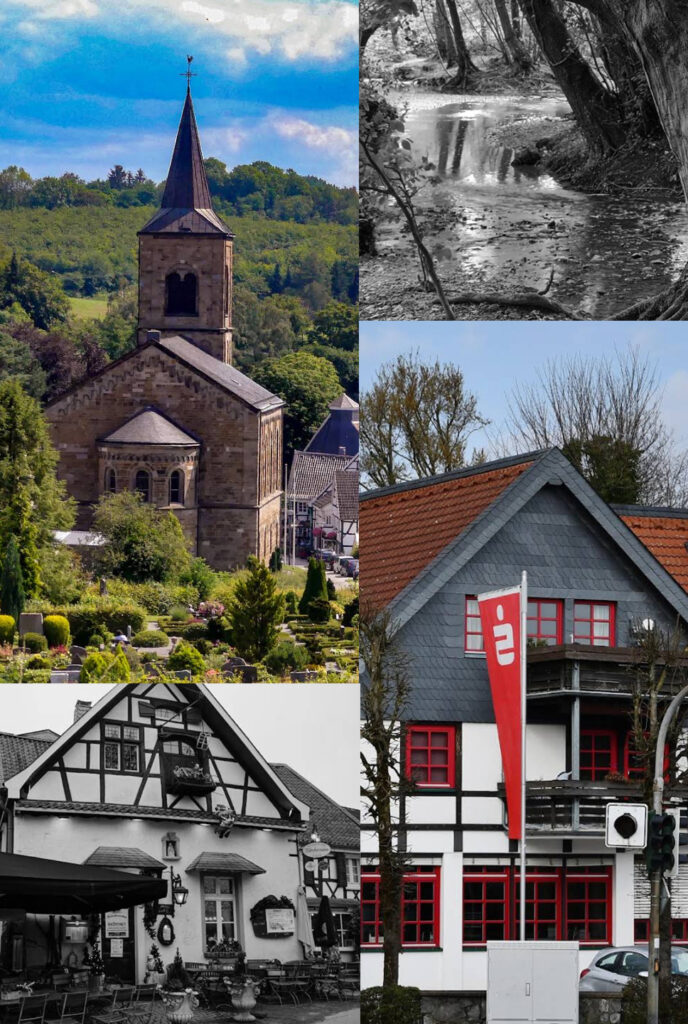
Yesterday was a wonderful day. Sunday, September 13, 2020. I was with my children at Dominic’s place in Wülfrath. We will return to him many times. But I want to talk about this small town now.
There are no “new people” here—refugees, immigrants from southern countries, mostly from the Arab world. Almost all arrived with fake documents or without any at all. But, as everywhere in Germany, there are many “last people” here as well.
“Last people” are people who live alone in large apartments and have no children. If you do not produce offspring, you can consider yourself the last person on earth.
We will talk about this later and unfold this topic thoroughly, because this paradox will inevitably lead to the collapse of a very beautiful country and the intelligent, pragmatic people who inhabit it. The collapse of Europe is loneliness, caused by several factors. More about this problem a little later.
So, Wülfrath is a small town hidden about 30 kilometers from the capital of our federal state, Düsseldorf. A place where the foot of “new people” has not yet stepped. All traditions are preserved here. People are friendly; they greet you even if they see you for the first time. Several churches, from different sides, inform the population about time irreversibly slipping away. A small restaurant opens at 12:00, but local pensioners wait for it from 11:00. They warm themselves in the sun and tell each other simple stories to pass the hour before the meal. They all know each other and warmly welcome strangers, as if inviting them into this little paradise—a paradise that will soon dissolve into time.
In just five or ten years, buses with Chinese tourists will come here to photograph the last Germans. I write this with pain in my heart, because I am very sorry that we are losing this paradise. We are losing it consciously, understanding that Germany will not be the same—and doing nothing to save it. If you’ve noticed, I write about Germany as about my own country. Yes, five years were enough to fall in love with it, even though it has its flaws and is capricious. But if we don’t think about the bad things, yesterday was a wonderful sunny day that we spent with our children in this cozy town.
Dominic lost his children just like I did. He was thrown out of his home, discarded like old furniture. Note that our families are completely different—I am Ukrainian, Dominic is German—but we suffered from exactly the same radical and separatist feminism that has no nationality. I will return here more than once—for example, today I will ride my motorcycle to pick up my son’s sweater that he forgot there. But let’s not stray from the planned course. It’s time to talk about Russians.